How to Build a Full-Funnel Digital Marketing Strategy for Business Growth
In the competitive world of digital marketing, success isn’t just about driving traffic or making quick sales—it’s about creating a comprehensive marketing strategy that guides potential customers through every stage of their journey, from discovering a brand to becoming loyal advocates. A full-funnel marketing strategy is the blueprint for sustainable business growth, addressing each critical touchpoint in the customer journey with tailored content, messaging, and tactics. This article is worth reading because it will transform how you approach digital marketing, shifting from fragmented campaigns to an integrated full-funnel approach that maximizes conversion rates, improves ROI, and builds lasting customer relationships. Whether you’re a seasoned marketer looking to optimize your marketing efforts or a business owner seeking to understand effective digital marketing, you’ll discover how to align your tactics across the funnel, nurture prospects at every stage, and create a seamless experience from awareness to conversion and beyond. By implementing a full-funnel digital marketing strategy, you’ll stop focusing only on sales and start building a sustainable engine for long-term growth that attracts the right audience, addresses their pain points, and converts them into loyal customers.
Understanding the Marketing Funnel and Its Key Stages
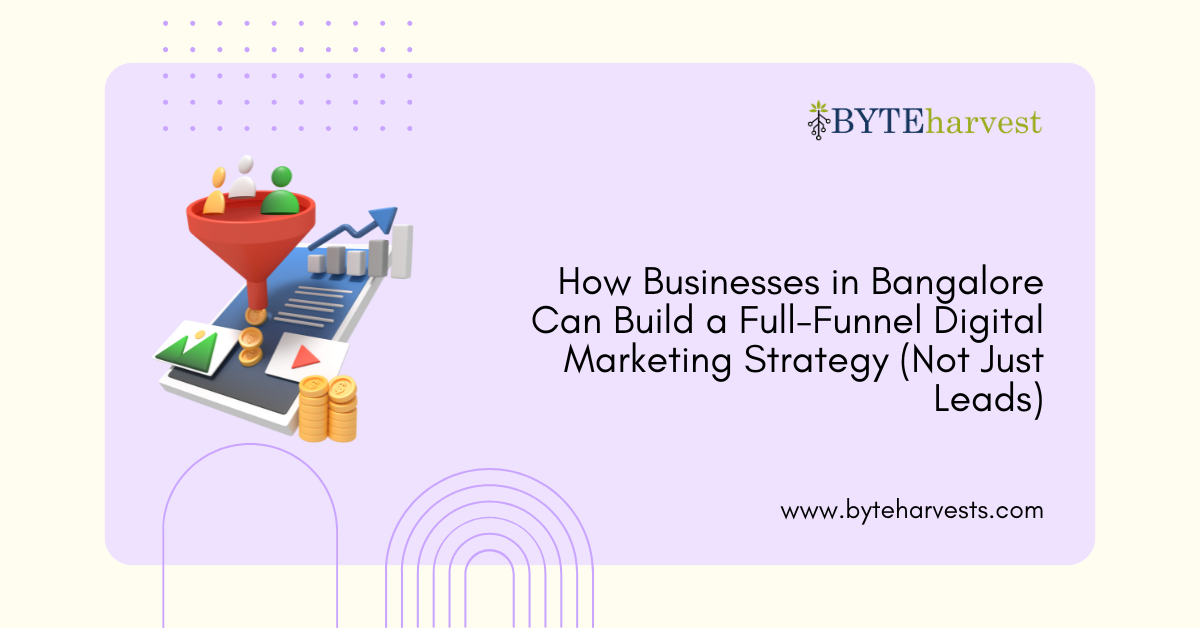
The marketing funnel is a framework that represents the customer journey from initial awareness to final conversion and retention. This funnel visualizes how potential customers move through different stages of awareness, consideration, and decision-making before becoming paying clients. Understanding each stage of the marketing funnel is crucial for developing a marketing strategy that effectively guides prospects toward conversion while building trust and credibility along the way.
At the top of the funnel (TOFU), prospects are just discovering your brand or product and may not even be fully aware of your brand or their own needs. The middle of the funnel (MOFU) represents the consideration phase where leads are evaluating solutions and comparing options. The bottom of the funnel (BOFU) is where qualified prospects are ready to make purchasing decisions. Beyond conversion, there’s also the retention and advocacy stage where you turn customers into repeat buyers and brand ambassadors.
A full-funnel marketing approach recognizes that each stage of the funnel requires different content, messaging, and tactics. Rather than concentrating all efforts on one phase, successful digital marketing addresses every stage of the funnel with appropriate strategies. This comprehensive view ensures you’re not just generating awareness or pushing for immediate sales, but creating a cohesive experience that moves people naturally from awareness to conversion while maximizing the return on investment at every stage.
Why Full-Funnel Marketing Strategy Matters for Digital Marketing Success
Traditional marketing often focuses heavily on either awareness or conversion, creating gaps in the customer journey that lead to lost opportunities and inefficient spending. A full-funnel marketing strategy solves this problem by ensuring that prospects receive the right message at the right time, regardless of where they are in their decision-making process. This holistic approach dramatically improves conversion rates because it nurtures relationships and builds trust throughout the entire journey.
One of the primary benefits of full-funnel digital marketing is improved resource allocation and ROI. When you optimize every stage, you reduce drop-offs between phases and ensure that the traffic you generate at the top actually converts at the bottom. Without middle-funnel nurturing, for example, you might spend thousands attracting visitors who disappear before ever considering a purchase. Full-funnel thinking prevents this waste by creating content and campaigns that guide potential customers smoothly from one stage to the next.
Moreover, a full-funnel strategy provides comprehensive data and analytics that reveal exactly where prospects are getting stuck and where your marketing efforts are most effective. This data-driven approach allows for continuous optimization across the entire customer journey, making your digital marketing strategy increasingly cost-effective over time. In today’s complex digital landscape with multiple digital touchpoints and longer sales cycles, businesses that implement full-funnel marketing consistently outperform competitors who take a fragmented approach, achieving sustainable business growth rather than temporary spikes in traffic or sales.
Top of the Funnel: Building Awareness and Attracting the Right Audience
The top of the funnel is where you build awareness and attract the right audience to your brand. At this stage, potential customers are experiencing problems or opportunities but may not yet know about your solution or even fully understand their needs. Your primary goals are to get discovered, establish credibility, and provide value without asking for anything in return. SEO, content marketing, social media, and paid advertising are the primary channels for top-of-funnel activities.
SEO is particularly powerful at this stage because it captures people actively searching for information related to your industry. Creating blogs for awareness that answer common questions, provide educational resources, and address pain points helps you rank in search engines and establishes your authority. These blog posts, infographics, videos, and guides should be informative and helpful, focusing on the problems your target audience faces rather than immediately pitching your products. Using social media platforms like LinkedIn, Instagram, Facebook, and Twitter to share this content expands your reach and helps you connect with prospects where they already spend time.
Paid advertising through Google Ads, Facebook Ads, and display networks can accelerate top-of-funnel growth, but it must be carefully targeted to attract qualified prospects rather than just any traffic. The key at this stage is to cast a wide but relevant net—you want volume, but it should be the right audience that could eventually convert. Include clear calls-to-action (CTAs) that move people to the next stage, such as subscribing to your email list, downloading a resource, or following your social channels. Remember, at the top of the funnel, success isn’t measured by immediate conversions but by the quality and quantity of engaged prospects entering your funnel who will be nurtured toward eventual purchase.
Middle of the Funnel: Nurturing Leads and Building Consideration
Once prospects are aware of your brand, they enter the middle of the funnel where they’re actively researching solutions and comparing options. This is where nurture campaigns become critical. At this stage of awareness, potential customers need more detailed information about how your solution addresses their specific needs, why it’s better than alternatives, and proof that it actually works. Your marketing approach shifts from education to demonstration and differentiation.
Email marketing is one of the most effective tools for middle-funnel engagement. Through targeted email sequences, you can nurture leads with case studies, comparison guides, webinars, and detailed product information that moves them closer to a purchase decision. Segmenting your email list based on behavior, interests, and demographic data allows you to send highly relevant messages that resonate with each prospect’s specific situation. Marketing automation platforms and CRM systems help you deliver these personalized experiences at scale, tracking engagement and adjusting your approach based on how prospects interact with your content.
Content at this stage should include product demos, free trials, webinars, white papers, and detailed guides that showcase your expertise and solutions. LinkedIn is particularly valuable for B2B middle-funnel marketing, allowing you to share thought leadership content and engage directly with decision-makers. Retargeting campaigns also play a crucial role here, keeping your brand visible to people who’ve shown interest but haven’t yet converted. The goal throughout the middle funnel is to build trust, answer objections, and demonstrate value so thoroughly that when prospects reach the decision stage, your brand is the obvious choice. Success at this stage is measured by engagement metrics, lead scores, and movement toward bottom-funnel activities.
Bottom of the Funnel: Converting Qualified Leads into Customers
The bottom of the funnel is where all your awareness and nurturing efforts pay off through actual conversions. At this stage, prospects have decided they need a solution and are choosing between specific vendors or products. Your focus shifts entirely to conversion optimization, removing friction from the buying process, and providing the final proof points that close deals. This is where demo requests, free consultations, pricing pages, and sales conversations happen.
Content at the bottom should be highly conversion-focused: customer testimonials, detailed case studies showing measurable results, product comparison sheets, pricing calculators, and limited-time offers. These materials address the last objections and provide the social proof needed to make a confident purchase decision. Every element of your bottom-funnel pages—from the copy to the design to the CTAs—should be optimized for conversion rate improvement. Remove unnecessary form fields, simplify the checkout process, offer multiple payment options, and provide clear next steps.
Sales and marketing alignment is critical at this stage of the funnel. Your CRM should seamlessly pass qualified leads to sales teams with complete context about their journey, interests, and engagement history. For e-commerce businesses, abandoned cart emails, exit-intent popups, and chat support can recover sales that might otherwise be lost. The metric that matters most here is obviously conversion, but also pay attention to cost per acquisition and customer lifetime value to ensure your full-funnel strategy is delivering profitable business growth. A well-optimized bottom funnel doesn’t just convert prospects—it converts the right prospects into customers who will provide long-term value and potentially become repeat customers.
Creating Integrated Content Strategies Across the Funnel
A truly effective full-funnel marketing strategy requires integrated content that seamlessly guides prospects from one stage to the next. This means planning your content holistically rather than creating isolated pieces. Each piece of content should naturally lead to the next stage, creating a logical progression from awareness to consideration to decision. Start by mapping out the questions, concerns, and information needs prospects have at every stage of their journey.
At the top of the funnel, create educational content that addresses broad problems and builds awareness: blog posts about industry trends, how-to guides, infographics, and social media content that provides value without requiring commitment. These pieces should include subtle CTAs that offer deeper resources—downloadable guides, email newsletters, or webinar registrations—that move people into the middle funnel. Your middle-funnel content picks up where top-funnel left off, diving deeper into solutions: comparison guides, detailed case studies, email courses, and webinars that demonstrate your expertise and differentiate your offering.
Bottom-funnel content completes the journey with conversion-focused materials: free trials, product demos, pricing guides, consultation offers, and customer success stories. The key to integration is ensuring consistent messaging and branding across all content while tailoring the depth and focus to each stage. Use analytics to identify where prospects are dropping off and create targeted content to address those gaps. Employ automation to deliver the right content at the right time based on behavior and engagement. This integrated approach transforms your content from a collection of random pieces into a strategic asset that actively guide prospects through their customer journey, dramatically improving both the efficiency of your marketing spend and your overall conversion performance.
Leveraging SEO and Paid Advertising for Full-Funnel Reach
SEO and paid advertising work together to ensure your full-funnel marketing reaches prospects at every stage. SEO excels at capturing intent-driven traffic from people actively searching for solutions, while paid advertising allows you to proactively reach target audiences and accelerate results. A sophisticated digital marketing strategy uses both channels strategically across the funnel rather than treating them as separate initiatives.
For top-of-funnel SEO, focus on informational keywords that address common questions and problems in your industry. Create comprehensive content that ranks for these terms and naturally introduces your brand to people in the early stages of awareness. Middle-funnel SEO targets comparison keywords and solution-focused searches where people are evaluating options. Bottom-funnel SEO captures high-intent keywords like “buy,” “pricing,” and “demo” where conversion intent is strongest. This multi-tier SEO approach ensures you’re visible regardless of where prospects start their journey.
Paid advertising complements SEO by filling gaps and accelerating growth. Use display ads and social media advertising for top-of-funnel awareness, targeting broad audience segments with educational content and brand messaging. Retargeting campaigns keep your brand visible to people who’ve engaged with your content, moving them through the middle funnel. Search ads capture high-intent bottom-funnel traffic, bidding on commercial keywords that indicate purchase readiness. LinkedIn ads are particularly effective for B2B full-funnel campaigns, allowing precise targeting by job title, company size, and industry. The key is to optimize your ad messaging and landing pages for each stage of the funnel, ensuring the experience matches the prospect’s mindset and needs. By integrating SEO and paid advertising into a cohesive full-funnel strategy, you maximize reach, control costs, and create multiple pathways for prospects to enter and progress through your marketing funnel.
Using Marketing Automation and CRM to Optimize Every Stage of the Funnel
Marketing automation and CRM systems are the technological backbone of an effective full-funnel marketing strategy. These tools allow you to deliver personalized experiences at scale, track prospect behavior across all touchpoints, and optimize your funnel based on real data rather than guesswork. Without automation, managing complex multi-stage nurture campaigns across hundreds or thousands of prospects becomes practically impossible.
A properly configured CRM captures every interaction a potential customer has with your brand—website visits, content downloads, email opens, demo requests, and more—creating a complete picture of their journey. This data allows you to segment your audience based on behavior, demographics, and stage of the funnel, delivering highly relevant messages to each group. For example, someone who downloaded a top-funnel guide might enter an automated email sequence that provides additional educational content over several weeks, gradually moving them toward middle-funnel offers like webinars or case studies.
Marketing automation workflows can trigger specific actions based on prospect behavior: send a follow-up email when someone attends a webinar, alert sales when a lead reaches a certain score, or launch a retargeting campaign when someone visits pricing pages but doesn’t convert. These automated responses ensure no prospect falls through the cracks while freeing your team to focus on strategy and high-value activities. AI-driven automation is increasingly sophisticated, using predictive analytics to identify which prospects are most likely to convert and what content will be most effective for each segment. By leveraging automation and CRM technology, you create a measurable, scalable full-funnel marketing machine that continuously improves through optimization based on actual performance data, maximizing efficiency and ROI across every stage.
Measuring Success: Key Metrics for Each Funnel Stage
Effective full-funnel marketing requires stage-specific metrics that reveal how well you’re performing at each phase of the customer journey. Tracking only final conversions misses crucial insights about where your funnel is strong and where it’s leaking prospects. A comprehensive measurement strategy monitors both stage-specific metrics and overall funnel health, enabling data-driven optimization that improves results across the entire journey.
At the top of the funnel, focus on awareness metrics: website traffic, social media reach, impressions, and new visitors. Track SEO rankings for target keywords, the growth of your email subscriber list, and social media follower counts. These metrics indicate whether you’re successfully building awareness and attracting the right audience. Middle-funnel metrics shift to engagement: email open and click-through rates, content downloads, webinar attendance, time on site, pages per session, and lead quality scores. These reveal how effectively you’re nurturing prospects and moving them toward purchase consideration.
Bottom-funnel metrics center on conversion: conversion rate, cost per acquisition, demo requests, free trial signups, and actual sales. Also track customer acquisition cost and lifetime value to ensure your funnel is profitable. Across the entire funnel, monitor progression rates—what percentage of top-funnel prospects move to middle funnel, and what percentage of middle-funnel leads convert. Identify where drop-offs occur and investigate why. Use Google Analytics and your CRM to create dashboards that provide visibility into funnel performance at a glance. Attribution modeling helps you understand which channels and campaigns contribute most to conversions across multiple touchpoints. By establishing clear metric benchmarks for every stage and regularly reviewing performance, you can continuously optimize your full-funnel strategy, doubling down on what works and fixing what doesn’t to achieve sustained business growth and improved return on investment.
Common Full-Funnel Marketing Mistakes and How to Avoid Them
Even experienced marketers make common mistakes when implementing full-funnel strategies. One of the most frequent errors is neglecting middle-funnel nurturing, creating a “leaky bucket” where prospects generated through top-funnel efforts simply disappear before reaching conversion. This happens when businesses invest heavily in awareness and conversion tactics but fail to build the consideration-stage content and campaigns that bridge the gap. The solution is to map your entire customer journey and ensure you have robust strategies for every stage, not just the beginning and end.
Another mistake is using the same messaging and content across all funnel stages. A prospect just discovering their problem needs very different information than one comparing vendors. Bombarding early-stage prospects with aggressive sales messages drives them away, while providing only educational content to bottom-funnel leads delays conversions. Tailor your message, tone, and call-to-action to match each stage of awareness. Similarly, many marketers fail to properly segment their audiences, sending generic campaigns that don’t resonate with anyone rather than targeted messages that speak to specific needs and situations.
Lack of attribution and measurement is another critical error. Without proper tracking, you can’t know which marketing efforts actually drive results across the funnel, leading to wasted budget and missed opportunities. Implement comprehensive analytics and attribution modeling from the start. Finally, many businesses create silos between teams responsible for different funnel stages—content teams focused on awareness, demand gen on leads, and sales on conversion—leading to disjointed experiences that confuse prospects. Breaking down these silos and fostering collaboration across teams ensures a seamless, integrated full-funnel approach where each stage supports the others. By recognizing and avoiding these common pitfalls, you’ll build a more effective full-funnel marketing strategy that efficiently moves prospects from awareness to conversion while maximizing ROI and building sustainable growth.
Implementing Your Full-Funnel Digital Marketing Strategy for Long-Term Growth
Successfully implementing a full-funnel digital marketing strategy requires careful planning, cross-functional collaboration, and commitment to continuous optimization. Start by thoroughly understanding your target audience—their pain points, decision-making process, and preferred channels. Map the customer journey from initial awareness through repeat business, identifying all the touchpoints where prospects interact with your brand. This mapping reveals gaps where prospects might drop off and opportunities to improve the experience.
Next, audit your existing content and campaigns, categorizing everything by funnel stage. You’ll likely discover you have plenty of top-funnel content but gaps in middle or bottom stages. Develop a content calendar that addresses these gaps with blogs, videos, case studies, testimonials, webinars, and demos appropriate for each phase. Ensure your technology stack—including your CRM, marketing automation platform, and analytics tools—is properly integrated to track prospects across all digital touchpoints and automate appropriate responses based on behavior.
Build cross-functional alignment between marketing, sales, and customer success teams. Everyone should understand the full-funnel approach and their role in it. Marketing generates and nurtures leads, sales converts qualified prospects, and customer success retains customers and generates referrals and repeat business. Regular meetings to review funnel metrics, discuss challenges, and optimize processes ensure continuous improvement. Start with a pilot program focusing on one customer segment or product line, learn what works, then scale successful tactics across your entire digital marketing strategy. Remember that building an effective full-funnel marketing machine takes time—expect to iterate and optimize for several months before seeing optimal results. However, the long-term growth, improved efficiency, and sustainable competitive advantage that comes from a truly integrated full-funnel approach makes the investment worthwhile for any business serious about digital marketing success.
Key Takeaways: Building Your Full-Funnel Digital Marketing Strategy
- A full-funnel marketing strategy addresses every stage of the customer journey—from initial awareness to consideration to conversion and retention—ensuring prospects receive the right message at the right time throughout their decision-making process.
- The marketing funnel consists of key stages: top of the funnel (awareness), middle of the funnel (consideration), and bottom of the funnel (conversion), each requiring different content, tactics, and metrics to effectively guide prospects toward purchase.
- Full-funnel thinking dramatically improves ROI by reducing drop-offs between stages, ensuring that traffic generated at the top actually converts at the bottom, and creating a more efficient, cost-effective marketing approach than focusing on isolated tactics.
- Top-of-funnel efforts focus on building awareness through SEO, content marketing, blogs for awareness, social media platforms, and paid advertising designed to attract the right audience and establish credibility without demanding immediate commitment.
- Middle-funnel nurture campaigns are critical for moving prospects from awareness to consideration through email marketing, webinars, case studies, and automation that builds trust, demonstrates value, and differentiates your solution from competitors.
- Bottom-funnel optimization centers on conversion with high-intent content like testimonials, product demos, pricing information, and streamlined purchase processes that remove friction and provide the final proof points needed to close sales.
- Integrated content strategies ensure seamless progression across the funnel by creating logical pathways from one stage to the next, with each piece of content naturally leading to deeper engagement and eventual conversion.
- SEO and paid advertising work together across the entire funnel—SEO captures intent-driven traffic at every stage while paid advertising fills gaps, accelerates growth, and enables retargeting campaigns that keep prospects engaged throughout their journey.
- Marketing automation and CRM systems enable scalable personalization by tracking prospect behavior across all digital touchpoints, triggering appropriate responses, and providing data-driven insights for continuous optimization of every stage of the funnel.
- Stage-specific metrics reveal funnel health: track awareness metrics at the top (traffic, reach, new visitors), engagement metrics in the middle (email opens, downloads, time on site), and conversion metrics at the bottom (conversion rate, cost per acquisition, sales).
- Common mistakes include neglecting middle-funnel nurturing, using the same message across all stages, failing to properly segment audiences, lacking attribution and measurement, and creating organizational silos that prevent seamless customer experiences.
- Successful implementation requires mapping the customer journey, auditing existing content, addressing gaps at each stage, ensuring technology integration, and fostering cross-functional alignment between marketing, sales, and customer success teams.
- A full-funnel approach delivers long-term growth by creating sustainable systems for attracting qualified prospects, building relationships, optimizing each stage, and retain customers who generate repeat business and referrals.
- Continuous optimization based on analytics is essential—regularly review funnel performance, identify where prospects drop off, test improvements, and refine your digital marketing strategy to maximize return on investment across every stage.
- The shift from awareness to conversion requires building trust at every stage through valuable content, consistent messaging, proof points, and experiences that address pain points and demonstrate your solution’s unique value proposition.