SEO
Google E-E-A-T Guidelines in 2026: What Actually Builds Trust and Authority
If your SEO plan is still “add more keywords, publish more often,” you are optimising for a version of Google that stopped existing a few years ago. Most ranking drops we see now trace back to the same cause: the content never demonstrated why anyone should trust it. That is what E-E-A-T is about.
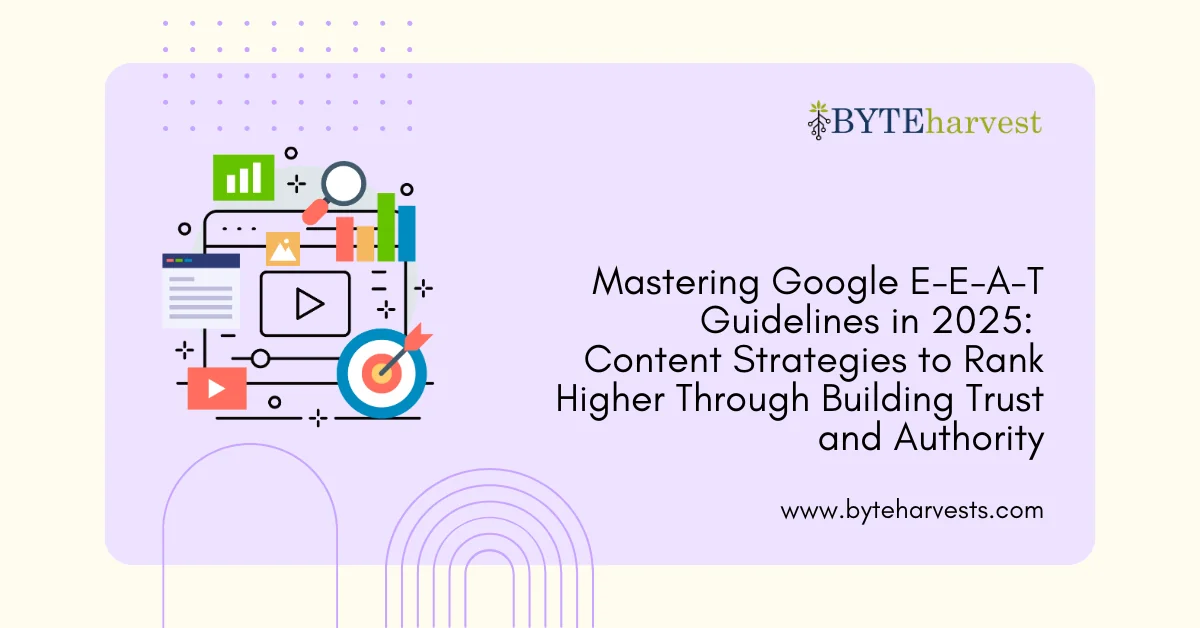
E-E-A-T stands for Experience, Expertise, Authoritativeness and Trustworthiness. It is not a switch you flip — it is the framework Google’s human quality raters are trained to apply when judging whether content deserves to rank, and the signals those evaluations have taught the algorithm to recognise on its own. This is a practical look at what each of the four actually means, how to show it honestly, and where a site’s technical foundations support or undermine it.
What E-E-A-T actually is
The first E, Experience, is the newest addition — it asks whether you have actually done the thing you are writing about, not just read about it. Expertise is legitimate knowledge and skill in the field. Authoritativeness is whether others — other sites, other experts, your own track record — recognise you as credible. Trustworthiness is whether a reader can rely on what you say.
None of the four is a direct ranking factor the way page speed is. There is no “E-E-A-T score” in the algorithm. What exists is a set of quality-rater guidelines that describe what strong E-E-A-T looks like, and an algorithm that has learned to recognise those same patterns at scale. For YMYL topics — Your Money or Your Life, meaning medical, financial or legal content — the bar is highest, because the cost of bad advice is highest. But Google applies the same lens well beyond YMYL now. Content that cannot demonstrate real knowledge is competing at a real disadvantage regardless of how well it is otherwise optimised.
Experience: proof you have actually done it
Academic knowledge and hands-on experience are not the same thing, and Google has gotten better at telling them apart. The clearest way to show experience is specific: real case studies with real numbers, not theory; photos or details from work actually done, not descriptions lifted from elsewhere; an account of what worked, what didn’t, and what changed as a result.
This has become the most defensible advantage a site has. AI-generated content can produce a competent-sounding article on almost any topic in seconds, but it cannot produce your specific results, your specific client outcomes, or your particular read on a problem you’ve actually solved. Content built around real experience is harder to copy and harder for Google to mistake for something scraped and rewritten.
Authoritativeness: whether others vouch for you
Authoritativeness is not self-declared — it has to be externally validated. Quality backlinks are the strongest version of that: when a respected site in your industry links to your content, it is vouching for it in a way no bio ever could. That kind of link is earned by publishing something genuinely worth citing — original research, a definitive guide, real data — not by asking for it.
Beyond links, authority builds through guest contributions on legitimate publications, conference talks, reputation built through consistent public track record, and simple honesty about the edges of what you know. Real authorities are specific about their limits. Claiming expertise you don’t have is the fastest way to lose the trust you’re trying to build.
Expertise: verifiable, not just claimed
Formal credentials help but are not the whole story — fifteen years of hands-on work can outweigh a credential with no real-world application behind it. What matters is making expertise visible and checkable: a real author bio with specifics (“managed SEO for 100+ clients across e-commerce, SaaS and local business, averaging 150%+ organic traffic growth”), not a placeholder line; links to a portfolio or previous published work; for a company, the team’s actual credentials shown prominently rather than buried.
The content itself is still the strongest evidence. Specific detail, real data, the edge cases and exceptions a surface-level article never mentions — that is what separates expert content from something written after five minutes of research, and readers notice the difference as much as Google does.
Trustworthiness: nothing else works without it
Of the four, trust is the one that makes the others matter. Experienced, expert, authoritative content that nobody trusts still doesn’t convert.
Trust starts with transparency — a real About page, real contact details, real author bios (not stock photography), and disclosed relationships wherever there’s a financial one. It continues with accuracy: sources cited properly, claims fact-checked, mistakes corrected quickly, content kept current. Stale information erodes trust fast, and it is one of the easiest things to fix. Genuine testimonials, verifiable case studies and real reviews all add third-party proof that a site cannot manufacture on its own — and that proof, unlike almost everything else in SEO, is built slowly and lost in a single bad-faith moment.
Content built around the reader, not the algorithm
The practical version of all four principles is simpler than it sounds: build content that actually serves the person reading it, and the ranking signals tend to follow. That starts with genuinely understanding intent — someone searching “how to improve SEO” wants a specific, actionable answer, not three hundred words of generalities padded to hit a word count.
Depth beats spread. One well-researched piece that addresses the real questions, the common objections and the nuances most competitors skip outperforms ten shallow ones. Clear structure — real headings, scannable paragraphs, a genuine FAQ section — makes that depth usable rather than exhausting to read.
The technical layer that supports it
E-E-A-T is fundamentally about content quality, but the technical foundation decides whether Google can actually see it. Schema markup — author schema, organisation schema, review schema, FAQ schema — makes the signals explicit rather than implicit. A clear site structure with real, substantial About and author pages (not placeholder text) reinforces the same signals. Page speed, mobile usability, HTTPS and clean Core Web Vitals don’t replace good content, but a slow or broken site undermines the trust that good content is trying to build.
The wider footprint counts too
Google doesn’t evaluate a site in isolation — it reads the broader digital footprint. An active, genuinely-run social presence, managed reviews across Google Business Profile and other platforms, and a track record of how criticism gets handled publicly all feed into the same authority and trust signals as the content itself. Brand mentions, citations and partnerships extend that footprint further. None of it substitutes for the content — all of it reinforces it.
For a Bangalore business specifically, this footprint is usually thinner than it should be. A single, complete Google Business Profile with accurate categories, real photos and consistent name-address-phone details across Indian directories does more for local trustworthiness than another blog post will. Genuine reviews — asked for, not manufactured — are one of the few trust signals a competitor genuinely cannot copy. If the content strategy is strong but the profile and citations are thin, the E-E-A-T story is only half told.
Working with an agency that actually understands this
Not every agency treats E-E-A-T as central, and it’s worth checking before you commit budget. A team that only offers technical tweaks and link-building without touching content quality or trust signals is solving half the problem. The better test: does the agency audit how your content demonstrates expertise and what trust signals your site actually displays, not just your technical SEO checklist — and can they show real case studies with real, sourced numbers rather than promises of fast rankings? Ask directly how content strategy fits into their approach and how they measure success beyond raw rankings.
Measuring E-E-A-T over time
There’s no single metric for E-E-A-T, but a combination of signals tells the story: ranking movement on competitive terms (where Google is more selective about what it shows), organic traffic trends — particularly from informational and branded search — and engagement metrics like time on page and bounce rate. A backlink profile that’s growing in quality, not just count, matters more than raw link volume. Regular content audits — updating stale information, cutting thin content, filling in missing author detail — keep the whole site aligned with the standard rather than letting it drift.
Applying this to what you publish next
Before anything goes live, it’s worth running it through a simple filter: does this show first-hand experience with the topic? Would someone who actually works in this field respect it? Is it clear why the person writing this is qualified to? Would a reader trust it enough to act on it?
Every piece needs a real author bio, specific to that person and that topic — not a generic line that could describe anyone. Every significant claim needs a source or a reason, not just an assertion. And the structure needs to answer what the reader actually came for, completely, without padding it out to hit a length target.
The takeaways
- E-E-A-T is the framework, not a ranking factor — it’s what quality raters are trained to look for, and what the algorithm has learned to recognise on its own.
- Experience is the hardest thing to fake — specific results, real case studies and first-hand detail are the strongest competitive edge against generic or AI-generated content.
- Credentials need to be visible and verifiable, not just claimed — real bios, real links, real specifics.
- Authority is earned, not declared — through backlinks, recognition and a consistent public track record.
- Trust is transparency plus accuracy — real information about who you are, sourced and current content, and proof you can’t manufacture yourself.
- Content should serve the reader first — depth on the real question beats breadth across many shallow ones.
- Technical foundations amplify the signal — schema, site structure and page experience make good content visible; they don’t substitute for it.
- The wider digital footprint counts — reviews, mentions and social presence all feed the same evaluation as the content itself.
- Choose an SEO partner who treats this as central, not an afterthought bolted onto technical work.
None of this is a shortcut — it’s a description of what actually earns a site the right to rank well, and it rewards the same thing consistently: genuine expertise, applied honestly, over time.
Want help putting this into practice?
This is everyday work for our SEO team, working with businesses across Bengaluru. Book a free 30-minute consultation — no pitch, just an honest view of what would move the needle for you.
Book a Free Consultation →